


An independent OSCE Moscow Mechanism expert reports a marked democratic backsliding in Georgia
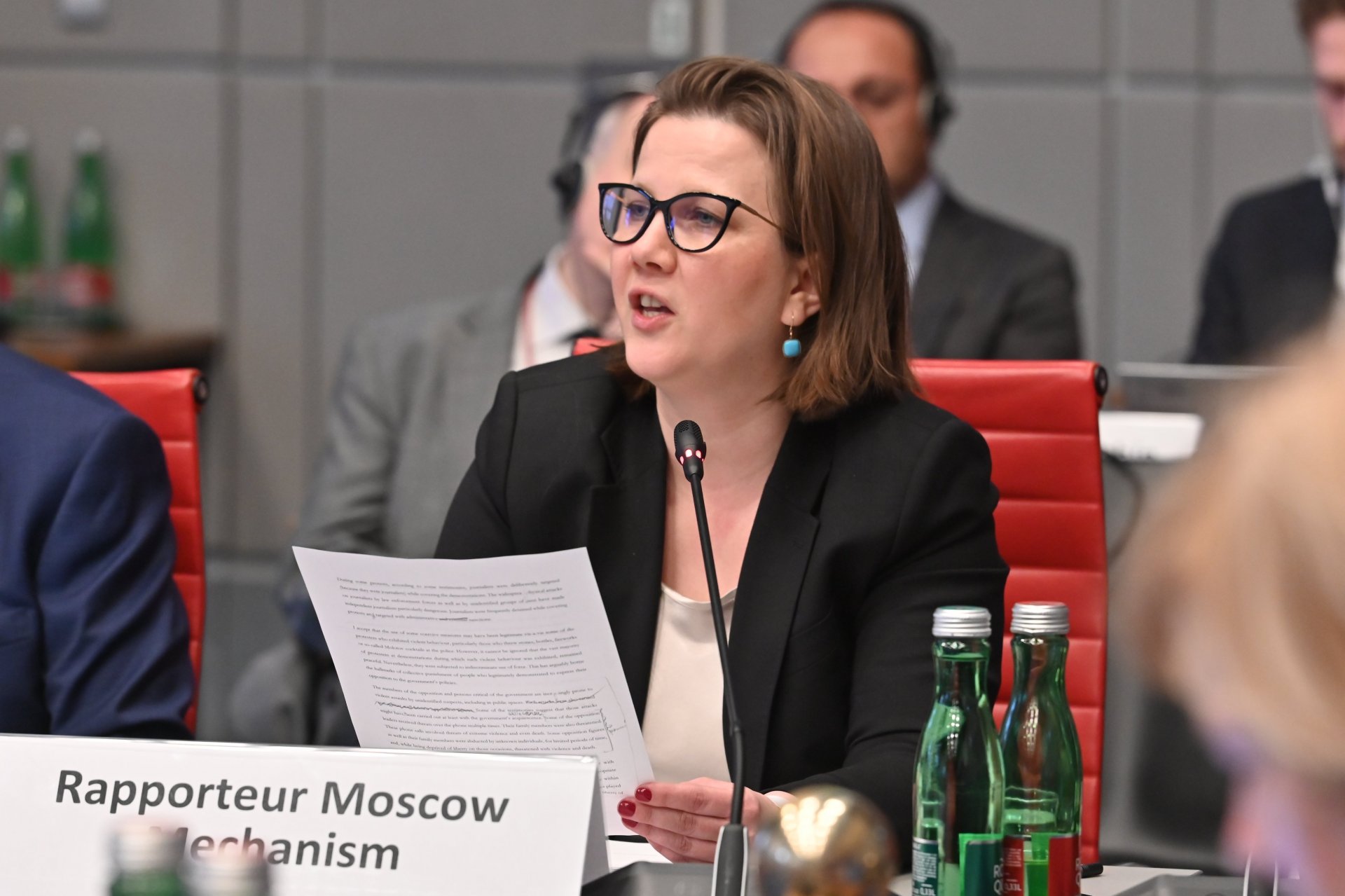
On March 12 in Vienna, an independent OSCE Moscow Mechanism expert presented a report to the OSCE Permanent Council on developments in Georgia in respect of human rights and fundamental freedoms since Spring 2024.
The report identifies a pattern of violence and other abuses against protesters, political opposition leaders and journalists, including physical attacks, arbitrary detentions, and threats. It highlights the almost complete impunity of perpetrators, noting that cases against protesters proceed quickly, while investigations into law enforcement violations stall. The report finds that legislative developments have systematically restricted human rights and fundamental freedoms. Laws targeting so-called “foreign influence”, alongside amendments affecting the media, assemblies, and political participation, have unduly limited freedoms of expression, association, and peaceful assembly, creating a chilling effect on civil society and independent media. The report also warns of ongoing threats to political pluralism, such as the imprisonment of opposition figures and attempts to ban opposition parties. Hostility toward independent actors is compounded by unchecked violence from unidentified groups who assault government critics in public, with apparent impunity. This is further fueled by fierce, stigmatizing rhetoric from government-affiliated individuals. The report further raises concerns about the right to a fair trial for those criminalised for dissent.
Professor Patrycja Grzebyk, a Moscow Mechanism expert, concluded that a marked democratic backsliding has taken place in Georgia and provided detailed recommendations to address human rights concerns.
Lithuania and other countries that invoked the Moscow Mechanism stressed that these developments undermine human rights, fundamental freedoms and the rule of law to which Georgia has committed as an OSCE participating State. They urged Georgian authorities to fully implement the Moscow Mechanism recommendations, conduct prompt, independent and impartial investigations into law enforcement violations, hold those responsible to account, repeal legislation incompatible with international commitments, release all individuals detained for political reasons, ensure political pluralism, and restore trust in the judiciary by strengthening judicial independence and ensuring fair trial guarantees.
The Moscow Mechanism exists to support participating States in upholding their shared human rights commitments. On 29 January 2026, 23 OSCE participating States, including Lithuania, invoked the Moscow Mechanism in response to the deteriorating human rights situation in Georgia.
The full report is available here.
Photo credit: OSCE/Micky Kroell
